Why Smart Boards Are Essential for Teachers in 2026
January 30, 2026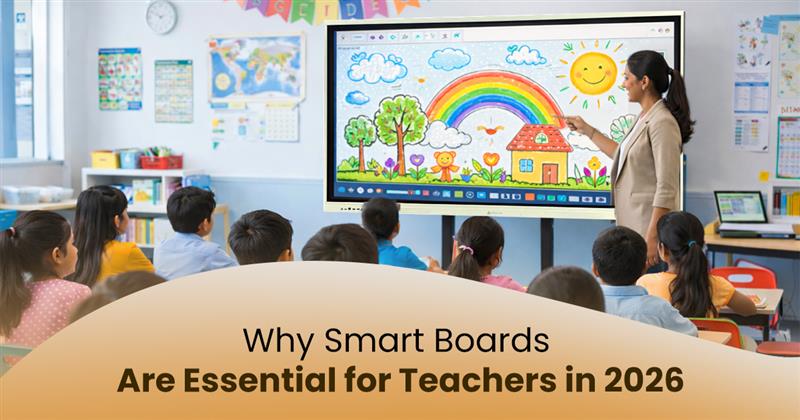
Teaching in 2026 looks very different in this digital ear. Now students expect learning more in visual, interactive, and engaging way. Undoubtedly, smart boards help teachers meet these expectations by turning simple lessons into meaningful experiences. They make lessons clearer, save time, and keep students involved in the classrooms. Now smart boards are no longer optional, they are integral part in the modern classrooms.
- What Is a Smart Board for Teaching?
- Why Smart Boards Became Important So Quickly
- The Problem with Traditional Teaching Tools
- How Smart Boards Make Lessons More Interesting
- Helping Students Understand, Not Just Memorize
- Saving Teachers from Daily Stress
- Better Control Inside the Classroom
- Learning That Fits Every Student
- Teaching Beyond the Physical Classroom
- Why IT Teams Trust Smart Boards
- DeltaView Smart Boards: Built for Teachers
- Support That Actually Helps
- Are Smart Boards Worth the Cost?
- What Schools Experience After Using Smart Boards
- Conclusion: Teaching Smarter, Not Harder
What Is a Smart Board for Teaching?
A smart board for teaching is a large touch screen display that is being used in classrooms nowadays. Teachers can write on it, show videos, open presentations, draw diagrams, and even let students come forward and interact with the lesson. The biggest difference is a smart board allows interaction, not just explanation.
Instead of students only listening, they can see, touch, respond, and participate. Learning becomes active, not passive.
Why Smart Boards Became Important So Quickly
A few years ago, smart boards used to be optional. Today, they are necessary. Why? Because learning itself has changed. Students learn better when lessons feel real and visual. Teachers teach better when they don’t have to repeat the same explanation again and again.
Smart boards grew from simple touch screens into powerful classroom tools. By 2026, they are stable, easy to use, and designed specifically for education—not just technology lovers.
The Problem with Traditional Teaching Tools
Traditional boards still work, but they have limits. Writing everything by hand takes time. Explaining complex ideas without visuals creates confusion. And once the class ends, everything written is erased. Teachers often feel tired repeating the same things. Students often forget what they heard. Smart boards reduce this gap. They allow teachers to explain once, clearly, and visually.
How Smart Boards Make Lessons More Interesting
When something moves, students look. When something reacts, students listen. Smart boards allow teachers to show short videos, diagrams, animations, or live examples. This keeps students interested without forcing them. Even quiet students often feel more confident when they can interact with the board instead of speaking loudly in class.
Helping Students Understand, Not Just Memorize
Many students struggle not because they are weak, but because they don’t understand the “why” behind a topic. Smart boards help teachers slow down and explain visually. A math problem can be broken into steps. A science concept can be shown instead of described. History can feel like a story, not a list of dates. This improves understanding and builds confidence.
Saving Teachers from Daily Stress
Teaching already takes energy. Smart boards reduce unnecessary effort. Teachers can prepare lessons once and reuse them. Notes can be saved and shared. No need to rewrite the same content for every class. Over time, this saves hours every week. Less pressure. Less rushing. More focus on students.
Better Control Inside the Classroom
A classroom works best when students stay involved. Smart boards help teachers keep that flow. Teachers can ask quick questions. Students can respond instantly. If something is unclear, it shows immediately. This makes teaching more flexible. Teachers adjust on the spot instead of waiting for exams to realize students didn’t understand.
Learning That Fits Every Student
Not every student learns the same way. Some need visuals. Some learn by listening. Some learn by doing. Smart boards support all of this naturally. A teacher can talk, show, and interact—all in one lesson. This makes classrooms more fair and more effective.
Teaching Beyond the Physical Classroom
In 2026, learning is not limited to four walls. Students may attend classes from home or another location. Smart boards help teachers continue teaching without changing their method. Lessons can be shared online. Students can follow along in real time. This keeps learning consistent, no matter where students are.
Why IT Teams Trust Smart Boards
From an IT point of view, smart boards reduce complications. Instead of managing multiple devices, cables, and systems, everything comes together in one place. DeltaView smart boards are built to work smoothly with existing school systems. They are stable, secure, and easy to maintain. This saves time for IT teams and avoids classroom disruptions.
DeltaView Smart Boards: Built for Teachers
DeltaView smart boards are becoming first choice in classrooms. We design them for real classrooms. Teachers need screens that respond quickly, don’t freeze, and are easy to understand. They don’t want complex menus or confusing tools. Our smart boards focus on simplicity, reliability, and long-term use.
Support That Actually Helps
Technology only works when support is available. DeltaView provides installation, teacher training, and ongoing support. Teachers are guided step by step, without pressure. If something goes wrong, help is available. This builds confidence and trust.
Are Smart Boards Worth the Cost?
Smart boards are an investment. But they save money over time. Less printing. Less paper. Less extra equipment. More importantly, they improve teaching quality. And that value lasts for years.
What Schools Experience After Using Smart Boards
Schools often notice changes quickly. Students participate more. Teachers feel more comfortable. Lessons flow better. The classroom atmosphere improves because teaching becomes smoother and learning feels lighter.
Conclusion: Teaching Smarter, Not Harder
In 2026, smart boards are not a luxury. They are a necessity for every teacher and student. They help teachers explain better, manage classrooms easily, and connect with students naturally. They support modern learning without adding pressure. At DeltaView, we believe technology should support teachers—not challenge them. Smart boards are one of the strongest tools helping education move forward.
FAQs
It is a digital board that allows teachers and students to interact with lessons.
No. DeltaView smart boards are designed to be simple and teacher-friendly.
Yes. They work well for hybrid and online learning.
Yes. Visual and interactive learning improves understanding.
Because they are reliable, simple, and supported with proper service.