Why AI Smart Boards Are Crucial for Successful Digital Transformation
February 27, 2026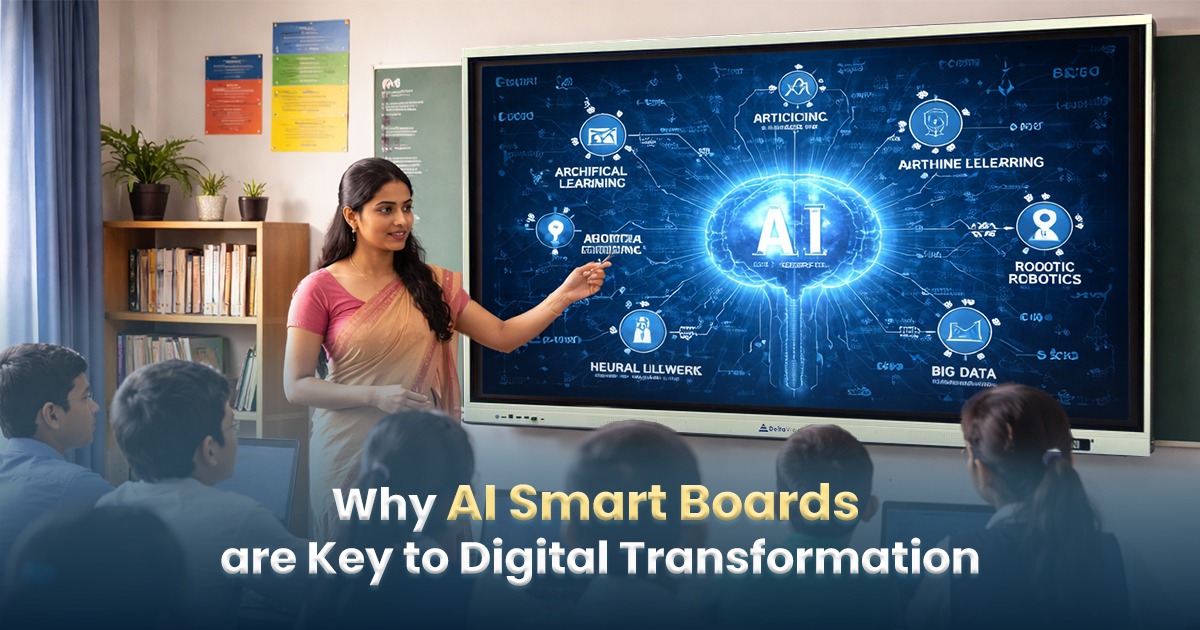
Digital transformation sounds like a big, technical term. But if we simplify it, it just means one thing, using the right technology to work smarter, not harder. In schools, it means making classrooms more interactive and future-ready. In enterprises, it means making meetings more productive and collaboration more seamless. And from what we’ve experienced at DeltaView, one tool sits right at the center of this shift: AI-powered smart boards.
- Digital Transformation Through Smart Board
- What Makes AI Smart Boards Different?
- DeltaView Smart Boards: Practical Intelligence in Action
- DeltaView Canvas: Where Teaching and Ideas Come Alive
- Why Smart Boards Are Essential for Modern Classrooms
- Enterprises Need Smarter Meeting Rooms Too
- A Long-Term, Future-Ready Investment
Let us explain why.
Digital Transformation Through Smart Board
Many institutions believe digital transformation starts with buying new hardware. A projector here, a few tablets there. But real transformation happens when technology changes the way people interact.
In classrooms, teachers want students to understand concepts better, especially when working toward goals like FLN (Foundational Literacy and Numeracy). In corporate settings, teams want meetings that lead to clear outcomes instead of long discussions with no structure.
A smart board for classroom use is no longer just a display screen. When powered by AI, it becomes an active participant in the room.
What Makes AI Smart Boards Different?
A regular interactive panel allows you to write and present. An AI-powered smart board goes a step further. Imagine a teacher explaining a math concept and needing an example instantly. With AI support, relevant visuals and references can be accessed quickly. There’s no pause, no technical delay, no break in the flow of teaching.
The same applies in enterprises. During brainstorming sessions, teams can annotate, highlight, and organize ideas directly on the board. Notes can be saved immediately. Nothing gets lost. Technology should reduce friction. That’s where AI truly makes a difference.
DeltaView Smart Boards: Practical Intelligence in Action
At DeltaView, we designed DeltaView Smart boards with one goal in mind — make technology feel natural. Teachers using smart boards don’t need special training to get started. The interface is simple. Searching for content is quick. Writing feels smooth. Switching between applications is seamless.
For schools working with TLM (Teaching Learning Material), smart boards make it easier to integrate digital content into daily lessons. Visuals, worksheets, and multimedia resources can be displayed and annotated in real time.
In enterprises, it supports collaboration without overcomplicating the setup. Wireless screen sharing, quick file access, and structured note-saving make meetings more efficient.
AI, in this case, is not flashy. It is practical.
DeltaView Canvas: Where Teaching and Ideas Come Alive
One feature that truly changes the experience is DeltaView Canvas. Think of it as a digital whiteboard, but far more flexible. Teachers can draw diagrams, underline key concepts, highlight important points, and save the entire session for later use.
In classrooms focused on FLN goals, this makes a real impact. Foundational concepts in literacy and numeracy require repetition and clarity. With DeltaView Canvas, lessons can be stored and reused. Students can revisit what was taught. Teachers can build on previous sessions instead of starting from scratch.
In corporate environments, Canvas becomes a creative workspace. Teams can map ideas, structure strategies, and organize thoughts visually. And instead of wiping everything away at the end of the meeting, it stays documented.
That small difference changes productivity levels significantly.
Why Smart Boards Are Essential for Modern Classrooms
A smart board for teaching does more than display slides. It supports interaction. Students today are used to screens. But passive viewing doesn’t improve learning. Interaction does.
AI-powered smart boards allow:
- Multi-touch collaboration
- Real-time annotation
- Audio-visual content integration
- Quick content sharing
When students participate, learning becomes active. Engagement increases naturally. Digital transformation in education is not about replacing traditional teaching. It’s about enhancing it.
Enterprises Need Smarter Meeting Rooms Too
Digital transformation is equally important in corporate spaces. Hybrid meetings are now common. Teams work across cities and sometimes across countries. An AI-powered smart board becomes the central hub for collaboration.
Instead of dealing with cables and compatibility issues, teams connect wirelessly. Notes are organized. Ideas are captured instantly. Presentations feel smoother. Over time, this consistency improves team efficiency. And that’s what digital transformation is really about — improving outcomes.
A Long-Term, Future-Ready Investment
Many institutions compare smart board price before making a decision. But the smarter approach is to evaluate value.
An AI-powered smart board replaces multiple tools:
- Projectors
- Traditional whiteboards
- Separate conferencing devices
- External collaboration software
By integrating everything into one system, it simplifies infrastructure and reduces long-term costs.
DeltaView designs its smart boards to be durable, secure, and adaptable. Technology evolves quickly, and our goal is to ensure institutions stay ahead rather than struggle to catch up.
The Bigger Picture
Digital transformation is not a trend. It is a shift in mindset. In classrooms, it supports better teaching outcomes and stronger foundational learning. In enterprises, it supports clearer communication and faster decision-making.
AI-powered smart boards sit at the intersection of hardware, software, and human interaction. They don’t replace teachers or leaders — they support them.
At DeltaView, we see this every day. When the right technology is placed in the right environment, progress becomes visible. That’s why AI-powered smart boards are not just useful tools. They are crucial elements of successful digital transformation.
FAQs
AI smart boards improve interaction, collaboration, and productivity in classrooms and meeting rooms, making technology more effective and outcome-driven.
They go beyond display and writing by offering intelligent content access, seamless app switching, and instant note-saving.
They help teachers integrate digital content, annotate lessons in real time, and save sessions for reuse—supporting better learning outcomes.
They enable wireless sharing, structured brainstorming, and efficient hybrid meetings without technical delays.
Yes. They replace multiple tools in one system, reducing costs and simplifying infrastructure over time.