What is a Smart Classroom? A Guide to Smarter Learning
April 7, 2025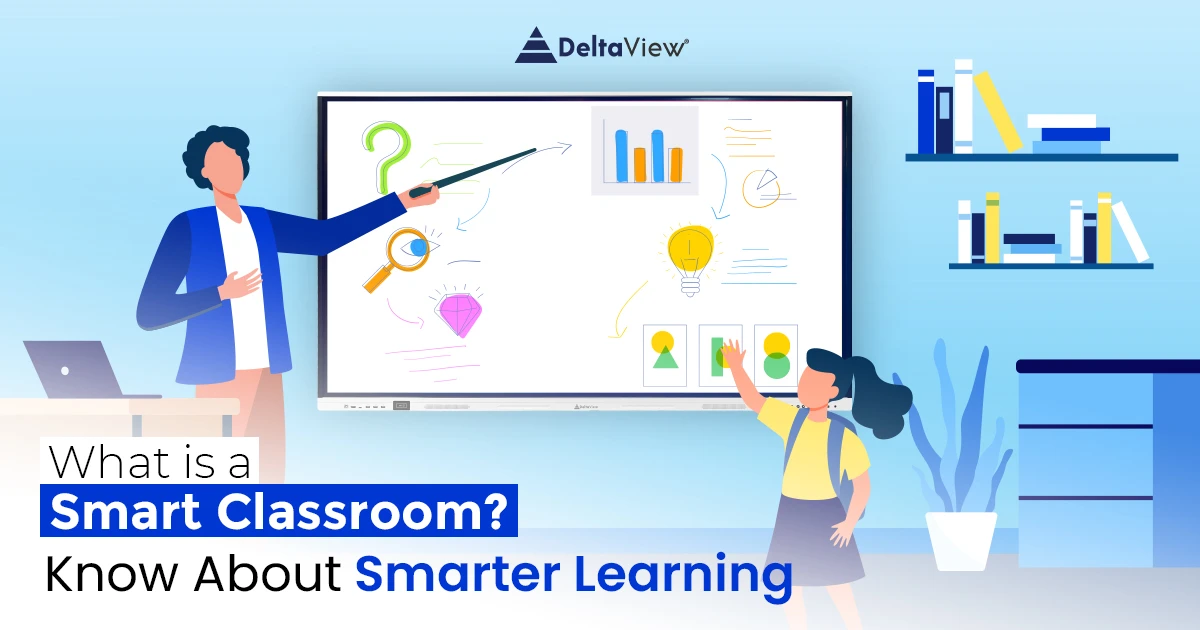
In the education landscape, traditional classrooms are replacing with Smart Classroom. This has digitally enhanced environment where teachers and students become more interactive, personalized, and impactful. When it comes to smart classroom, it uses modern technologies such as digital boards, learning management systems, eBooks, simulations, and multimedia content to empower both educators and students. Among the leading innovations in this space is the DeltaView Learn App, a comprehensive educational platform that is reshaping how knowledge is delivered.
- What is a Smart Classroom?
- Evolution: From Traditional to Smart Classrooms
- Key Features of a Smart Classroom
- Benefits of a Smart Classroom
- Smart Classroom vs Traditional Classroom
- Challenges of Smart Classrooms (and Solutions)
- Future of Smart Classrooms in India & Worldwide
- DeltaView Learn App: Revolutionizing Education
- DeltaView Learn for Schools & Institutions
- Bring DeltaView Learn to Your Classroom
- Conclusion
What is a Smart Classroom?
A Smart Classroom is a learning space equipped with advanced technology tools to give smarter learning experiences. Gone are days when we used to be depend on traditional setups that rely on chalk-and-talk methods, smart classrooms leverage digital tools like interactive flat panels, educational apps, animated videos, simulations, and real-time assessments. This approach makes education more visual, engaging, and student-centric.
Key Features of a Smart Classroom
- Interactive Flat Panels (IFP)
- Learning App
- Multimedia Content (Animated Videos, Audio Books)
- Recorded Lectures
- Real-Time Performance Analytics
Evolution: From Traditional to Smart Classrooms
It’s good to know how we reached here.
-
Traditional classrooms were teacher-centric: chalkboards, textbooks, lectures. Students were passive listeners.
-
Digital classrooms came next: projectors, PowerPoints, computer labs. Learning became a bit more visual but still limited.
-
Smart classrooms: now the focus has shifted to student engagement. Technology like smart boards, apps, and cloud platforms make learning interactive, collaborative, and personalized.
So basically, smart classrooms are not just about “digital tools.” They represent a mindset shift – from one-way teaching to two-way, student-centered learning.
Key Features of a Smart Classroom
Here are the common features that make a classroom truly “smart”:
-
Interactive Flat Panels (IFPs) → Touch-enabled boards that replace chalkboards. Teachers can write, draw, or display multimedia.
-
Multimedia Content → Videos, animations, audio lessons, simulations.
-
Recorded Lectures → Students can access lessons anytime later.
-
eBooks & Audio Books → Learning in multiple formats.
-
Real-time Analytics → Teachers track student progress instantly.
-
Cloud Storage → Lessons, notes, and assignments available anytime.
-
Gamified Learning → Quizzes, polls, competitions to make learning fun.
-
Multilingual Support → Content in regional languages for inclusivity.
Benefits of a Smart Classroom
- Engaged Learning: Multimedia tools increase student participation.
- Personalized Pacing: Students can learn at their own speed.
- Better Retention: Visuals and audio aid in deeper understanding.
- Collaborative Environment: Encourages group work and peer discussions.
- Accessibility: Supports diverse learners with audio, visual, and language-specific content.
- Teacher Empowerment: Helps educators with ready-to-use content, tools for evaluation, and insights into student performance.
Smart Classroom vs Traditional Classroom
| Aspect | Traditional Classroom | Smart Classroom |
|---|---|---|
| Teaching Style | Teacher talks, students listen | Interactive, student-centered |
| Tools | Chalkboard, textbooks | Smart boards, apps, multimedia |
| Learning Style | Mostly passive | Active, hands-on |
| Feedback | After exams | Real-time |
| Flexibility | One-size-fits-all | Personalized, adaptive |
| Retention | Short-term, memory-based | Long-term, concept-based |
Smart Classroom Technologies to Know
-
Interactive Flat Panels & Smart Boards
-
Cloud-based LMS for homework, notes, tests
-
High-speed Wi-Fi & cloud storage
-
Digital writing tools & stylus
-
Gamified quizzes, polls, live Q&A apps
-
Augmented Reality (AR) & Virtual Reality (VR) modules
-
AI-powered adaptive learning tools
-
PHET simulations for Science & Math experiments
These tools ensure classrooms are not just “digital,” but actually smart and interactive.
Challenges of Smart Classrooms (and Solutions)
Of course, smart classrooms are not perfect. Here are some challenges schools face:
-
High Cost: Equipment and maintenance can be expensive.
Solution: Start small with one or two smart classrooms, expand gradually. -
Teacher Training: Not all teachers are tech-savvy.
Solution: Regular training workshops and peer support. -
Infrastructure Issues: Weak internet or power cuts can interrupt learning.
Solution: Backup systems, offline access options. -
Distraction Risks: Students may misuse devices.
Solution: Controlled access and classroom management apps.
Future of Smart Classrooms in India & Worldwide
The future looks bright, honestly. A few trends shaping up are:
-
AI & Machine Learning → Personalized learning journeys for every student.
-
AR/VR-based lessons → Imagine history lessons in VR or science labs in AR.
-
Hybrid Classrooms → Mix of online + offline learning.
-
Data-driven Teaching → Teachers will use analytics to design lessons.
-
More Regional Content → Smart classrooms will offer more Indian languages.
In India especially, with government focus on Digital India and NEP 2020, adoption of smart classrooms will only grow faster.
DeltaView Learn App: Revolutionizing Education
At the heart of smart classrooms lies the DeltaView Learn App, a holistic digital learning platform designed to support teachers and empower students. With NCERT-based content and multi-format resources, DeltaView Learn offers a comprehensive learning experience suitable for today’s hybrid educational models.
1. Animated Videos for Visual Learning
Understanding complex concepts becomes easier with animated educational videos. DeltaView Learn provides a library of high-quality animations that make subjects like Science, Mathematics, and Social Studies more understandable and engaging. Visual learners benefit significantly from seeing how processes unfold step by step.
2. Recorded Lectures: Learn Anytime, Anywhere
Missed a class? No worries. With recorded lectures, students can revisit lessons anytime, enabling self-paced learning and better revision. These lectures, based on NCERT curriculum, are available in Hindi, English, Gujarati, and Marathi, making them accessible to a wider audience.
3. eBooks and Audio Books
DeltaView Learn includes a vast library of eBooks and audio books, transforming passive reading into an active learning experience. Whether you prefer reading digitally or listening while commuting, the app adapts to your preferred learning style.
4. NCERT Based Content
DeltaView Learn focuses on NCERT based content, ensuring students follow a structured and standardized syllabus. This aligns with school curricula across CBSE and many state boards in India, making it a perfect companion for students from Grade 1 to Grade 12.
5. Multilingual Learning Support
Education becomes more inclusive when delivered in a student’s native language. DeltaView Learn offers content in four major Indian languages:
- Hindi
- English
- Gujarati
- Marathi
This multilingual approach ensures that language never becomes a barrier in the learning process.
6. Real-Time Report Generation
Parents and teachers can monitor student progress using auto-generated performance reports. These insights help in identifying learning gaps early and personalizing teaching strategies.
7. PHET Simulations: Hands-On Science & Math
DeltaView Learn integrates PHET simulations – highly interactive tools that allow students to experiment with science and mathematics concepts in a virtual environment. These simulations are designed to mimic real-life experiments and scenarios, making STEM education exciting and practical.
DeltaView Learn for Schools & Institutions
Schools across India are upgrading their infrastructure with DeltaView Smart Boards and Learn App. This digital transformation improves academic outcomes, reduces teacher workload, and creates a modern learning environment that appeals to tech-savvy students.
Bring DeltaView Learn to Your Classroom
Upgrade your school or coaching institute with the DeltaView Smart Classroom Solution. Combine the power of interactive panels with the DeltaView Learn App and transform learning into a vibrant, personalized, and immersive experience.
Contact DeltaView today to schedule a free demo or visit our website to explore the future of education.
Conclusion
The world of education is changing, and smart classrooms are leading the transformation. They bring together technology, creativity, and inclusivity to make learning more exciting and effective.
Whether it’s through interactive flat panels, gamified quizzes, or apps like DeltaView Learn, the ultimate goal stays the same → helping students learn better and helping teachers teach smarter.
Smart classrooms are not just a trend, they are the future of education. And that future is already here.
FAQs
It’s a classroom where technology like smart boards, apps, and multimedia make learning more interactive and effective.
Digital classroom mostly means projector-based, using PowerPoints. Smart classroom goes beyond, adding interactive boards, apps, analytics, and student engagement tools.
Cost, infrastructure issues, and teacher training needs. But with proper planning, these can be managed.
Depends. A basic smart classroom can be affordable, while advanced setups with AR/VR cost more. Schools usually start small.
Teachers become facilitators and mentors, guiding students with digital resources instead of just delivering lectures.