Smart classroom technology helps by making learning interactive and visual. Tools like smart boards, videos, and digital content simplify complex concepts, keep students engaged, and encourage participation. It allows teachers to explain clearly, adapt lessons on the spot, and create a dynamic environment where students understand and retain knowledge more effectively.
How Smart Classrooms Are Enhancing Student Learning
January 19, 2026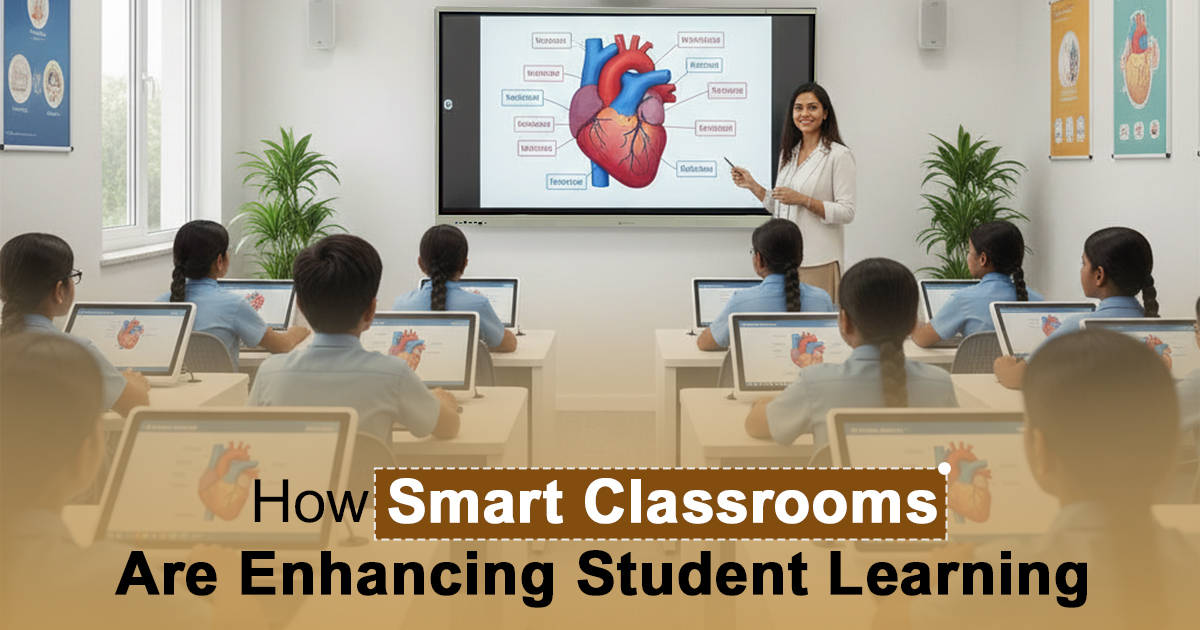
A smart classrooms are no longer a futuristic concept—it’s already a reality in many schools. By combining technology with teaching, it simplifies lessons, makes concepts easier to understand, and keeps students engaged. With tools like smart boards and interactive content, learning becomes clearer, more visual, and more accessible, helping both teachers and students thrive in today’s classroom.
Table of Contents
- What is Smart Classroom?
- What People Really Mean by Smart Classrooms
- Basic Elements Found in Smart Classrooms
- Why Traditional Teaching Is Struggling Today
- How Smart Classroom Technology Actually Helps
- Clear Visuals Reduce Confusion
- Smart Board for Education: A Practical Upgrade
- Teaching Becomes Flexible
- Saved Lessons Save Energy
- How Smart Classrooms Improve Student Engagement
- Students Participate Without Being Forced
- Technology Confidence Grows Naturally
- Group Learning Feels More Natural
- Smart Board Price: Looking at the Bigger Picture
- Designed for Real Classrooms
- Challenges Exist—but They Fade Over Time
- Where Smart Classrooms Are Headed
- Conclusion
What is Smart Classroom?
In smart classrooms, students no longer depend solely on textbooks as learning materials. They have the opportunity to use videos, online simulations, and other varied digital resources. Teachers use smart boards in the classroom to visually illustrate concepts, making lessons captivating and understandable.
What People Really Mean by Smart Classrooms
When people hear the term smart classrooms, they often imagine a room full of screens and gadgets. That’s not quite true.
A smart classroom is still a classroom. There’s a teacher, students, questions, confusion, and learning. The difference is that technology supports the explanation instead of getting in the way.
Basic Elements Found in Smart Classrooms
Most smart classrooms include:
- A smart board instead of a chalkboard
- Digital lesson material
- Visual explanations for topics
- Tools that let teachers switch pace easily
Why Traditional Teaching Is Struggling Today
Traditional teaching isn’t wrong. It’s just not enough anymore. Students like visuals nowadays, they watch videos to learn, pause when confused, and replay things when needed. Sitting through long verbal explanations can feel exhausting, even for bright students.
How Smart Classroom Technology Actually Helps
Clear Visuals Reduce Confusion
Instead of drawing rough diagrams, teachers can show clean visuals, real images, or short videos. That alone saves time and prevents misunderstanding. Many students don’t ask questions because they’re confused—they ask because they didn’t see the idea clearly.
Smart Board for Education: A Practical Upgrade
Teaching Becomes Flexible
If a student asks something unexpected, teachers don’t need to say, “We’ll cover this later.” They can show it immediately. That flexibility matters more than people realize.
Saved Lessons Save Energy
How Smart Classrooms Improve Student Engagement
Students Participate Without Being Forced
Technology Confidence Grows Naturally
Students using digital classrooms don’t feel intimidated by technology later. They treat it as normal, which helps them in higher education and careers. They learn with technology, not about it.
Group Learning Feels More Natural
Smart classrooms make collaboration easier. Students can solve problems together, correct mistakes openly, and explain ideas to each other. These moments build confidence in ways exams never can.
Smart Board Price: Looking at the Bigger Picture
The topic of smart board price often worries decision-makers. That’s understandable. But smart boards replace multiple teaching tools and are used daily. Over time, the value shows up in smoother classes, better understanding, and reduced teaching effort.
Designed for Real Classrooms
DeltaView smart classroom solutions are not complicated. Teachers don’t feel overwhelmed, and students adapt quickly. That simplicity makes a big difference in real-world use.
Challenges Exist—but They Fade Over Time
Yes, teachers need time to adjust. Yes, systems need basic support. But once smart classrooms settle in, they don’t feel new anymore. They just feel normal.
Where Smart Classrooms Are Headed
Smart classrooms are becoming less about innovation and more about expectation. As education moves forward, classrooms that help students understand clearly will always stand out.
Conclusion
Smart classrooms are enhancing student learning in quiet but meaningful ways. They make lessons clearer, teaching smoother, and classrooms more engaging. With practical solutions from DeltaView Technologies, schools can improve learning without losing the human touch that education depends on.
FAQs
A classroom that uses digital tools to make teaching clearer and more interactive.
Yes, they reduce repetition and make lessons easier to manage.
They help students understand concepts better, which improves learning naturally.
When used regularly, the long-term benefits usually justify the cost.
Because our solutions focus on usability, not complexity.