Digital Board for Teaching: Best Digital Smart Board by DeltaView
November 21, 2025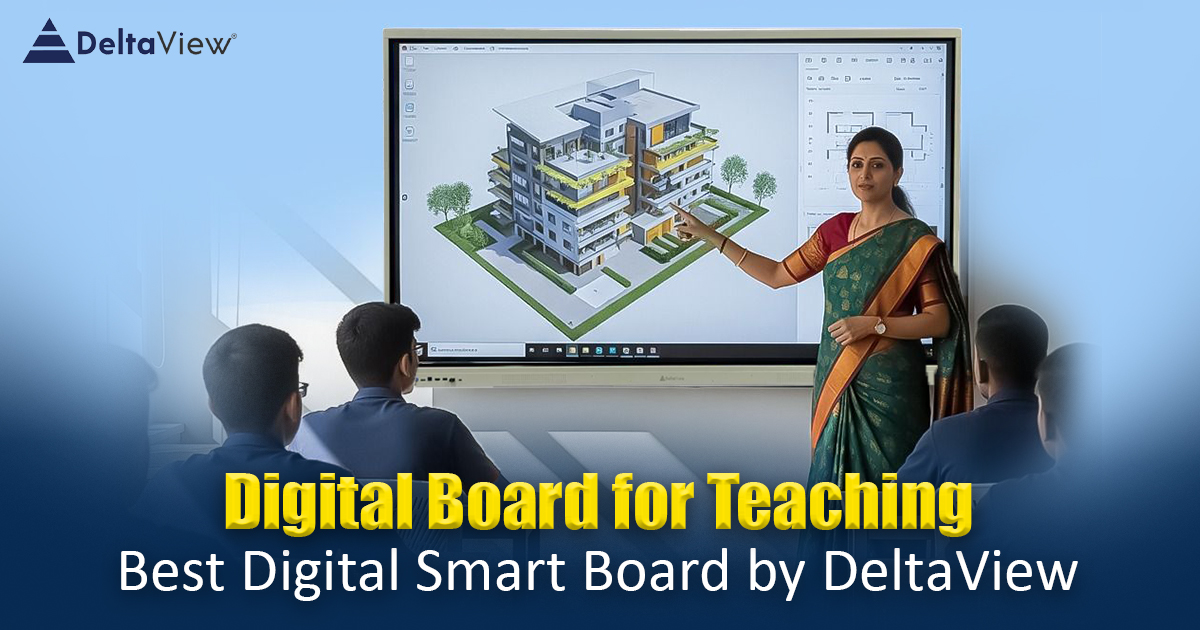
If you walk into any modern classroom today, you’ll notice something new. No chalk powder floating in the air, no dusty eraser marks, and no projector hanging from the roof. Instead, there’s a clean, bright touchscreen panel where teachers write effortlessly and students watch videos, diagrams, and animations with full attention. That smart panel is a digital smart board, and it has quietly become one of the most important teaching tools in Indian schools.
- What Is a Digital Board for Teaching?
- Why Digital Boards Are Becoming Popular in Indian Classrooms
- Why Many Schools Prefer DeltaView
- What Makes DeltaView’s Digital Board Different?
- Digital Board Price in India: What Should You Expect?
- How DeltaView Improves Classroom Teaching
- Choosing the Right Digital Smart Board for School
- Final Thoughts
Among the brands providing this technology, DeltaView is one that most teachers talk about not because it sounds fancy, but because it genuinely makes teaching easier. The board fits naturally into daily classroom work, even for teachers who are not tech-friendly. Let’s understand how digital boards work and why so many schools are switching to DeltaView.
What Is a Digital Board for Teaching?
Think of a digital board for teaching as a big computer or a TV screen. All combined into one big touch panel. Instead of chalk or markers, teachers write using their fingertips or a digital pen. The board can show lesson videos, zoom into diagrams, explain concepts through 3D visuals, and even record what the teacher writes on the screen.
The best part is that everything happens instantly. If a student doesn’t understand a concept, the teacher doesn’t need to draw complicated diagrams again and again. A quick tap brings up visuals, notes, or ready-made explanations. The result? More teaching and less time wasted rewriting or redrawing.
Why Digital Boards Are Becoming Popular in Indian Classrooms
The real reason behind this shift is not technology—it’s student interest. Children today grow up watching screens, videos, and animations. If the classroom stays stuck in just chalk and talk, students lose attention faster than ever. A digital board helps bridge that gap.
With one touch, a math problem becomes a puzzle, a geography lesson turns into an interactive map, and a science chapter feels more like a demonstration rather than a dry explanation. Suddenly, even a weak student begins participating because the concepts finally make sense.
Teachers benefit too. They don’t need to rush through lessons or worry about time-consuming diagrams. Everything is available in tools, videos, and templates built directly inside the digital smart board.
Different Digital Boards Used in Schools
Not every classroom needs the same type of smart panel. Here’s a simple difference:
- A digital writing board is mainly for writing and explaining step-by-step lessons. It’s like a better version of a whiteboard.
- A full digital smart board offers teaching software, diagrams, tools, apps, and even screen recording. This one supports both traditional writing and modern teaching.
- A touchscreen digital display board is used for multimedia teaching, YouTube classes, online apps, and hybrid sessions. It’s great for colleges and coaching institutes.
Schools choose based on what they teach, not just budget.
Why Many Schools Prefer DeltaView
The reason DeltaView stands out is simple—it has been designed for Indian schools, where digital boards are used for long hours, large batches, and heavy classroom handling. Teachers need something sturdy, reliable, and simple to use, not a complicated machine that looks good but breaks down easily.
DeltaView manufactures both hardware and software, which avoids the biggest problem most imported boards face: software mismatch and slow performance. The screen is covered with toughened safety glass, making it safe even for junior classes. And unlike many brands that only provide the panel and disappear, DeltaView offers installation, support, and teacher training.
What Makes DeltaView’s Digital Board Different?
Here are a few highlights teachers appreciate:
- Writing feels natural. It doesn’t lag, and it responds smoothly like writing on paper.
- Multi-touch support means multiple students can solve problems on the screen at the same time, which turns group work into fun learning.
- 4K visuals help even the backbenchers see everything clearly, especially small text or complex diagrams.
- Dual operating system (Android + Windows) gives teachers the flexibility to run both education apps and system-based learning software.
- It supports YouTube, NCERT content, online books, and subject tools without needing separate devices.
DeltaView doesn’t just add features—it builds features that teachers actually use every day.
Digital Board Price in India: What Should You Expect?
The digital board price largely depends on the screen size, software included, and build quality. Basic digital boards may start around ₹90,000, while advanced models designed for full classrooms may go up to ₹3,00,000 depending on size and durability.
Many schools make the mistake of choosing based only on price. A cheaper board might look attractive initially but may require frequent repairs or might not come with teacher training. DeltaView offers a balanced value—good durability, independent educational software, and reliable support—which means fewer long-term expenses.
How DeltaView Improves Classroom Teaching
Schools that install DeltaView boards often notice changes within a few weeks. Students participate more, teachers finish lessons faster, and classrooms become more disciplined because lessons are visually engaging. Teachers don’t need external speakers, dongles, projectors, or messy cables. Everything is built into one unit.
DeltaView software also offers subject tools like geometry sets, science diagrams, handwriting tools for languages, and even built-in screen recording. When a student misses a class, the recorded lesson can be shared. That alone makes it more useful than any traditional classroom setup.
Choosing the Right Digital Smart Board for School
Before choosing a smart board, schools should consider a few practical points:
- Size matters. Smaller rooms work well with 65 inches, while larger halls may require 75 or 86 inches for visibility.
- Software quality affects everything. If teaching tools are weak or complicated, the board becomes just an expensive TV.
- Touch response matters more than brand name. A smooth writing experience makes teachers actually use the board daily.
- Training and support are essential. A board is only useful if teachers know how to use it comfortably.
DeltaView stands out because it focuses on these practical requirements instead of showing off flashy but useless features.
Final Thoughts
Digital learning is no longer a luxury—it’s a necessity in today’s education. A digital board for classroom teaching doesn’t replace the teacher; it simply gives them better tools to teach. Students understand faster, teachers save time, and classrooms become more interactive. If there’s one brand that blends durability, simplicity, and teacher-friendly software, DeltaView digital smart boards are a reliable choice for schools, colleges, and coaching institutes looking to modernize without stress.
FAQs
It usually ranges from ₹90,000 to ₹3,00,000 depending on features and screen size.
Digital boards improve student engagement and help teachers explain concepts quickly using visuals.
DeltaView provides hands-on training and the interface is extremely simple.
Yes, DeltaView supports educational apps, online videos, and digital textbooks.
No. They work offline. The internet is only needed when using online content.